
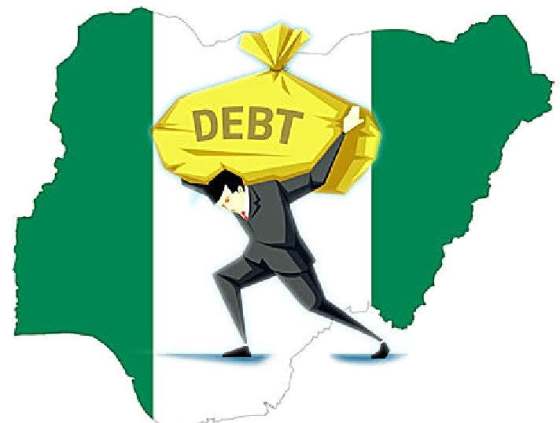
 The Federal Government debt repayments exceeded the 2025 amended budget allocation by N1.90tn in the first nine months of the year, fresh data from the Budget Office of the Federation has shown. The 2025 third quarter Budget Implementation Report showed that total debt-related payments, including domestic debts, foreign debts and sinking fund, rose to N12.63tn between January and September, compared with the prorated budget provision of N10.74tn. This represents an overrun of N1.90tn or 17.65 per cent.The pressure was driven mainly by debt service, which stood at N12.52tn in the first three quarters, against the prorated allocation of N10.45tn, showing excess spending of N2.07tn or 19.8 per cent. A breakdown showed that domestic debt service gulped N6.23tn, exceeding its N5.39tn provision by N832.42bn. Foreign debt service also rose to N6.30tn, surpassing its N5.06tn allocation by N1.24tn.The figures indicate that 67.2 per cent of the Federal Government's retained revenue of N18.63tn was spent on debt service in the first nine months of 2025. When the sinking fund is included, debt-related payments consumed about 67.8 per cent of revenue. This means that for every N100 retained by the Federal Government between January and September, about N67 went into servicing debts, leaving roughly N33 for salaries, overheads, capital projects, transfers and other obligations.The report also showed that aggregate Federal Government revenue underperformed the budget by N12.03tn or 39.24 per cent, as actual revenue of N18.63tn fell short of the N30.67tn projected for the first three quarters. In the third quarter alone, the government generated N7.70tn, below the quarterly target of N10.22tn by N2.52tn or 24.64 per cent. The Budget Office attributed the weakness largely to persistent oil revenue shortfalls, despite stronger non-oil collections.The debt burden also crowded out capital spending. Total capital expenditure stood at only N3.10tn in the first nine months, far below the N17.58tn budgeted for the period. This means actual debt-related payments were more than four times capital expenditure. The report stated that the debt service-to-revenue ratio remained elevated and warned that fiscal space was constrained, requiring urgent revenue mobilisation and expenditure rationalisation.Overall, aggregate Federal Government expenditure stood at N24.66tn, below the prorated N41.24tn budget by N16.58tn. However, the composition of spending showed that debt obligations took priority over capital releases. The fiscal deficit for the first three quarters stood at N6.03tn, compared with a prorated deficit target of N10.58tn, while financing items totalled N12.07tn, led by multilateral and bilateral project-tied loans of N4.81tn and domestic borrowing of N7.08tn.The figures suggest that Nigeria's main fiscal problem remains weak revenue rather than spending alone, as rising debt costs continue to absorb the bulk of government income and limit room for infrastructure investment. As fiscal pressures persist, the Federal Government is considering refinancing some of its costly obligations and tapping additional funding sources to bridge its budget shortfall, taking advantage of favourable market conditions and stronger investor sentiment driven by higher oil prices."We think that this timing is good for us to be able to maybe even refinance some of our expensive past debts, but also to raise more funding for our development at this critical time," Finance Minister Taiwo Oyedele told Bloomberg TV in an interview on Wednesday. "You don't know what happens tomorrow. But as of today, market conditions are actually very good."The improved outlook has been supported by the recent surge in crude oil prices following tensions involving the United States, Israel and Iran. As a major oil producer, Nigeria has benefited from stronger export earnings, while investors have become more confident about the country's ability to meet its obligations.According to Oyedele, the government is seeking ways to finance a budget deficit estimated at N30tn this year despite gains in tax revenue generated from fiscal and tax reforms introduced under the current administration. "We're keeping our options open; we know the size of the deficit," Oyedele said, including less-costly concessionary loans. He added that discussions were continuing with the World Bank and other multilateral institutions, while interest from international investors had increased as a result of reforms undertaken by the government.The minister's comments come as higher oil prices provide some relief for government finances, although they also pose risks to inflation. The resulting price pressures have complicated monetary policy, prompting the Central Bank of Nigeria to pause its interest-rate easing cycle. The development could further test the government's ability to fund critical infrastructure and social projects as President Bola Tinubu's administration seeks to sustain economic reforms and accelerate development spending.However, Oyedele recently said Nigeria could no longer rely mainly on borrowing to fund development, warning that the country must build a sustainable fiscal system capable of supporting critical sectors of the economy. It was reported earlier reported that the Federal Government spent only N3.10tn on capital projects in the first nine months of 2025 despite accessing N11.89tn from various debt financing sources during the period, highlighting the wide gap between borrowing and infrastructure spending.The post Nigerian government's debt repayment exceed budget allocation by nearly N2trn appeared first on Linda Ikeji Blog.


0 Comments